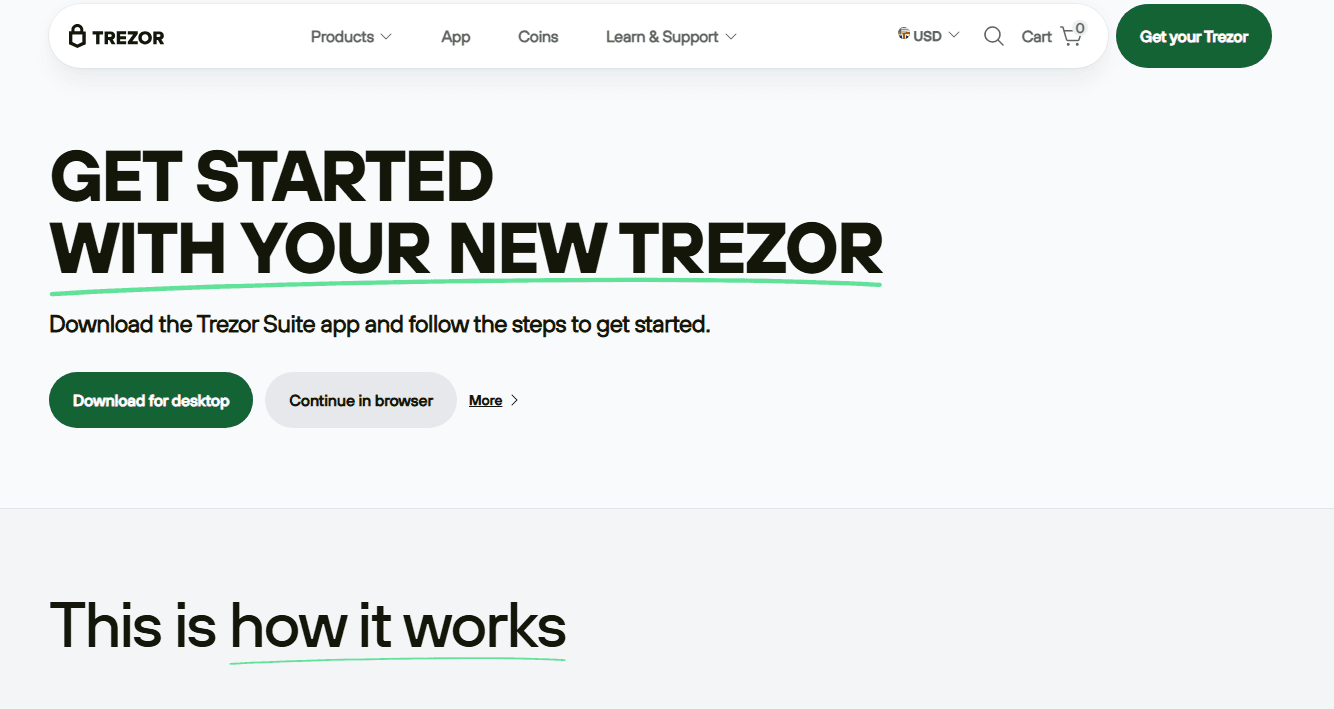
Trezor Suite: A Complete Platform for Secure Cryptocurrency Management
Trezor Suite is the official software application designed to work seamlessly with Trezor hardware wallets. It serves as a secure interface that allows users to manage, store, send, and receive cryptocurrencies while maintaining full ownership of their private keys. Built with security, privacy, and usability in mind, Trezor Suite is suitable for both beginners entering the world of digital assets and experienced users managing complex crypto portfolios.
Unlike online wallets or exchange platforms, Trezor Suite does not hold user funds or private keys. Instead, it communicates directly with the hardware wallet, where sensitive data remains securely stored offline. This design significantly reduces the risk of hacking, phishing, and malware-based attacks.
What Is Trezor Suite?
Trezor Suite is a desktop and web-based application developed to provide a safe and intuitive environment for interacting with Trezor hardware wallets. It enables users to monitor balances, manage accounts, initiate transactions, and adjust security settings without exposing private keys to the internet.
The software acts as a control center where users can view all supported cryptocurrencies in one place. Every critical action must be approved on the physical Trezor device, ensuring that control always remains in the hands of the wallet owner.
Why Trezor Suite Is Important
Cryptocurrency security depends on proper key management. Losing control of private keys often means permanent loss of funds. Trezor Suite addresses this challenge by combining user-friendly design with strong security measures.
Key reasons Trezor Suite is important include:
It supports true self-custody of digital assets
It protects users from online threats
It simplifies portfolio management
It provides transparency and control over transactions
By using Trezor Suite, users avoid reliance on third parties and reduce exposure to common security risks.
How Trezor Suite Works
Trezor Suite works by connecting directly to a Trezor hardware wallet through a secure channel. While the software displays balances, transaction history, and account information, it never gains access to private keys.
When a user initiates a transaction, Trezor Suite sends the transaction details to the hardware wallet. The wallet displays these details on its screen and requires physical confirmation from the user. Only after approval does the wallet sign the transaction and send it back to the software for broadcast.
This process ensures that even if the computer is compromised, funds remain protected.
Getting Started with Trezor Suite
Initial Setup
To begin, users connect their Trezor device to a computer and launch Trezor Suite. First-time users are guided through device initialization, which includes setting a PIN and generating a recovery seed.
The recovery seed is a sequence of words that serves as a backup for the wallet. It is essential for restoring access if the device is lost or damaged. This seed should be written down and stored securely offline.
Device Connection
Once the device is initialized, connecting it to Trezor Suite requires entering the PIN on the hardware wallet. After successful authentication, the software displays the main dashboard.
Dashboard and User Interface
Trezor Suite features a clean, well-organized interface designed for clarity and ease of use. The dashboard provides a snapshot of the user’s crypto holdings, including:
Total portfolio value
Individual account balances
Recent transaction activity
Supported assets
Navigation is straightforward, allowing users to switch between accounts, create new ones, and manage assets without confusion.
Managing Cryptocurrency Accounts
Trezor Suite allows users to manage multiple cryptocurrencies from a single application. Each supported asset can have multiple accounts, making it easier to separate funds for savings, trading, or daily use.
Sending Funds
When sending cryptocurrency, users input the recipient address and amount within Trezor Suite. Before the transaction is completed, the details are displayed on the hardware wallet for verification. This confirmation step protects against address manipulation and unauthorized transactions.
Receiving Funds
To receive cryptocurrency, Trezor Suite generates a receiving address. Users are encouraged to verify the address on the device screen before sharing it. This ensures the address has not been altered by malicious software.
Security Features of Trezor Suite
Security is the foundation of Trezor Suite. Some of its key features include:
Offline Private Key Storage
Private keys are stored exclusively on the hardware wallet and never leave the device. This prevents exposure to online threats.
PIN Protection
Access to the device is protected by a PIN. Incorrect attempts result in increased delays, discouraging brute-force attacks.
Recovery Seed Backup
The recovery seed allows users to restore their wallet on a new device if necessary. Without it, funds cannot be recovered.
Transaction Confirmation
All outgoing transactions require physical approval on the device, ensuring full user control.
Firmware Integrity Checks
Trezor Suite verifies the authenticity of the device firmware, helping detect unauthorized modifications.
Privacy-Focused Design
Trezor Suite is built with privacy in mind. It minimizes data collection and does not require personal information to operate. Users retain control over network settings and can limit unnecessary data exposure.
This privacy-first approach aligns with the core principles of cryptocurrency, offering financial independence without surveillance.
Firmware Updates and Maintenance
Regular firmware updates are essential for maintaining device security. Trezor Suite notifies users when updates are available and guides them through the update process.
Firmware updates must be confirmed on the hardware wallet, ensuring only verified updates are installed. Keeping both the software and firmware up to date helps protect against newly discovered vulnerabilities.
Common Issues and Troubleshooting
Users may occasionally encounter issues such as:
Device not being recognized
Connection interruptions
Forgotten PIN
Outdated firmware
Most issues can be resolved by reconnecting the device, restarting the application, or updating firmware. If access is lost, the recovery seed can be used to restore the wallet on a new device.
Best Practices for Using Trezor Suite
To ensure maximum security and smooth operation, users should follow these best practices:
Always verify addresses on the device screen
Store the recovery seed securely offline
Avoid using public or shared computers
Keep Trezor Suite and firmware updated
Never share PINs or recovery phrases
These habits help protect assets over the long term.
Who Should Use Trezor Suite?
Trezor Suite is ideal for:
Beginners learning secure crypto storage
Long-term investors holding digital assets
Users managing multiple cryptocurrencies
Anyone prioritizing security and privacy
It offers a balance between ease of use and advanced protection.
Advantages of Trezor Suite
Key advantages include:
Full ownership of private keys
Strong protection against hacking and phishing
Simple yet powerful interface
Support for multiple assets
Reliable recovery options
These benefits make Trezor Suite a trusted solution for crypto management.
Conclusion
Trezor Suite is a comprehensive and secure platform that empowers users to take full control of their cryptocurrency. By combining offline private key storage, mandatory device verification, recovery seed protection, and a user-friendly interface, it offers a reliable environment for managing digital assets.
Whether you are new to cryptocurrency or an experienced holder, understanding and using Trezor Suite correctly is essential for protecting funds and maintaining financial independence. With the right practices and careful management, Trezor Suite provides peace of mind and long-term security for crypto ownership.